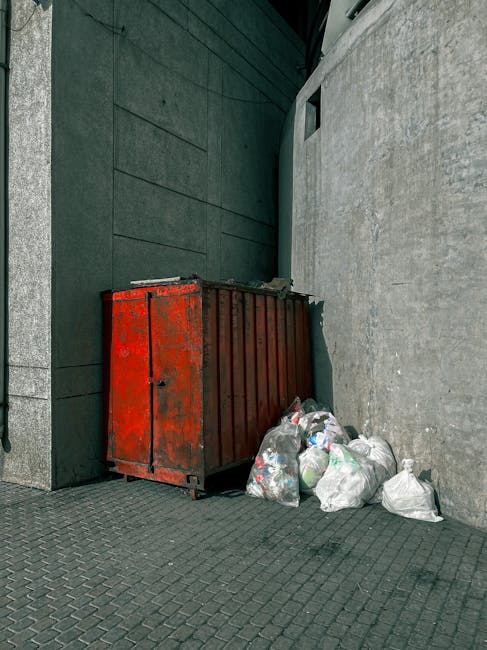
Norwood High Street bulky rubbish removal guide
If you live, work, or manage property near Norwood High Street, bulky waste has a habit of turning up at exactly the wrong time. A broken wardrobe in the hallway. An old fridge blocking access. Three chairs you meant to move "next weekend" and somehow they've been there for six months. This Norwood High Street bulky rubbish removal guide is here to make the whole process feel far less messy, less stressful, and a lot more manageable.
Whether you're clearing a flat, dealing with shop waste, tidying a garage, or helping a landlord turn a property around quickly, the basics are the same: know what counts as bulky rubbish, plan the collection properly, and choose the safest, most cost-effective route. Let's face it, the last thing anyone needs is an awkward pile of heavy stuff sitting outside on a wet London morning.
Table of Contents
- Why Norwood High Street bulky rubbish removal guide Matters
- How Norwood High Street bulky rubbish removal guide Works
- Key Benefits and Practical Advantages
- Who This Is For and When It Makes Sense
- Step-by-Step Guidance
- Expert Tips for Better Results
- Common Mistakes to Avoid
- Tools, Resources and Recommendations
- Law, Compliance, Standards, or Best Practice
- Options, Methods, or Comparison Table
- Case Study or Real-World Example
- Practical Checklist
- Conclusion
- Frequently Asked Questions
Why Norwood High Street bulky rubbish removal guide Matters
Bulky rubbish is not just "more waste". It is usually heavier, harder to carry, more awkward to sort, and more likely to cause delays if you leave it until the last minute. On a busy high street, that matters even more. Access can be tight, parking can be limited, and you may need a collection plan that avoids blocking pavements, doorways, or loading areas.
People often underestimate the real cost of bulky waste. A sofa left in a hallway can slow down a move. A stack of old office chairs can take up stock room space. A broken appliance in a front garden can become an eyesore overnight. And if materials are put out incorrectly, you may end up with extra charges, complaints from neighbours, or an unwanted return visit. Not ideal, to be fair.
This guide matters because it helps you decide what to do with large items before they become a bigger problem. It also helps you think beyond simple removal. For example, some items need separate handling, some can be reused, and some require particular care because of weight, electrical parts, or contamination. If you are dealing with a mixed load, a broader waste removal service can often be a better fit than trying to manage everything separately.
There is also a practical local angle. Along Norwood High Street, people are often balancing residential moves, shop refits, office clear-outs, and general life admin. The best removal plan is the one that suits your access, timing, and item type - not the fanciest one, just the one that actually works.
Expert summary: bulky rubbish removal is easiest when you sort items early, separate special wastes, and choose a collection method that matches the space you have available. Simple, but it saves a lot of hassle.
How Norwood High Street bulky rubbish removal guide Works
In plain English, bulky rubbish removal is the process of collecting and clearing items that are too large, heavy, or inconvenient for normal household disposal. That could mean furniture, mattresses, appliances, old fixtures, garage clutter, or building leftovers. The exact approach depends on what you have and how quickly you need it gone.
Most collections follow a few common stages. First, you identify the items. Then you separate anything that needs special disposal, such as electrical goods or potentially hazardous material. After that, the items are either moved from inside a property, loaded from kerbside access, or cleared from a yard, garage, loft, or office. Finally, the waste is transported for sorting, reuse, recycling, or disposal as appropriate.
If you have larger items like wardrobes, sideboards, or sofas, it can help to think in terms of dismantling versus lifting. Sometimes a quick disassembly makes the job safer and far easier. In other cases, the item is better removed whole. That judgement call matters. A rushed lift can damage walls, stair rails, or someone's back. And nobody wants that story.
For mixed domestic jobs, services such as house clearance, home clearance, or flat clearance may be more useful than a one-off item collection, especially if you are clearing several bulky pieces at once.
For commercial premises, the same logic applies, but with a little more pressure. A shop refit, office relocation, or stockroom clean-up needs timing, access planning, and minimal disruption. In those cases, office clearance and business waste removal are often the more sensible route.
Key Benefits and Practical Advantages
The biggest benefit of a well-planned bulky rubbish removal is time saved. That sounds obvious, but it is the main reason people use professional help. Dragging heavy items down stairs, borrowing a van, making multiple trips, and finding a legal disposal route can swallow a whole day. Sometimes two.
Another major advantage is safety. Bulky items are awkward because they shift, snag, and catch on corners. Even a relatively light item can become troublesome if it is bulky enough to block your view. Professional removal reduces lifting strain and lowers the risk of damage during the move. If you have older furniture or awkward appliances, that is worth a lot.
There is also peace of mind. You are not wondering where the items end up, whether they are handled properly, or whether you have missed a special disposal requirement. If you are dealing with white goods, it can be useful to look at dedicated options such as fridge and appliance removal, because appliances can need specific handling rather than a general clear-out.
Environmentally, a good bulky waste service should aim to sort reusable and recyclable materials where possible. That is one reason many people prefer a provider that talks openly about recycling and sustainability. It does not mean everything is recycled - that would be unrealistic - but it does mean the load is dealt with thoughtfully instead of just dumped into one bin and forgotten.
Practical advantage matters too. If your stairs are narrow, your lift is unreliable, or the item is too large for your car, a collection service is simply the easier option. Sometimes "easier" is the whole point. No drama, no borrowed wheelbarrow, no sore shoulders the next morning.
Who This Is For and When It Makes Sense
This guide is useful for a wide mix of people, but the common thread is simple: you have items that are too large, too heavy, or too awkward to remove easily yourself.
- Homeowners clearing old furniture, broken appliances, or loft clutter.
- Tenants moving out and needing to leave a property tidy.
- Landlords and letting agents preparing a flat or house for new occupants.
- Shop owners disposing of display units, stockroom items, or fit-out waste.
- Office managers clearing desks, chairs, filing units, and old equipment.
- Tradespeople dealing with mixed bulky waste after a project finishes.
Sometimes the trigger is obvious. A move-out date is coming, and the old bed frame still needs to go. Other times, it is less urgent but still necessary. Maybe the garage has become a museum of "useful" things you have not touched in years. Or perhaps a refurbishment has left you with one particularly awkward item that cannot be left on site.
If you are in a property with limited space, a loft clearance or garage clearance can be a smart way to tackle bulky waste without turning the entire home upside down. For furniture-heavy jobs, a dedicated furniture clearance service usually makes the process smoother too.
It makes sense when the time, effort, or risk of DIY removal is higher than the convenience of professional help. That is usually the moment people stop arguing with themselves and just book it. Sensible, really.
Step-by-Step Guidance
If you want the job done well, a little planning goes a long way. Here is the simplest way to approach bulky rubbish removal on or around Norwood High Street.
- List every item
Walk through the space and write down what needs to go. Be specific. "Old furniture" is not as useful as "two armchairs, one wardrobe, one broken desk, and a mattress." - Separate special items
Keep appliances, electricals, confidential paperwork, and anything potentially hazardous apart from standard bulky waste. That saves confusion later. - Measure awkward pieces
Doorways, stair bends, lift openings, and stairwell corners can turn a simple removal into a puzzle. A quick measurement avoids the classic "it fit in the room, but not out of it" problem. - Decide what can be dismantled
Flat-pack furniture, bed frames, shelving, and some office furniture may be easier to move in sections. Do not force it if dismantling would make the load unstable. - Check access
Think about parking, entry codes, stair access, and whether the collection point is inside the property or outside. On busy streets, small access details can affect the whole job. - Choose the right collection type
A single-item pickup, a mixed bulky waste collection, or a full-property clearance each suits different situations. Pick the one that matches the actual load. - Confirm pricing and timing
Ask how the work is priced, what is included, and whether there are any extra charges for difficult access or special items. Pricing and quotes matter more than people often admit. - Prepare the items
Empty drawers, remove personal belongings, and make sure the path is clear. If the items are in a garage or office, tidy the approach first so the removal is quicker. - Keep paperwork or sensitive waste separate
For business jobs, confidential material may need different handling. In some cases, confidential shredding is the proper route. - Inspect the area after collection
Check for any missed fixings, fragments, or damaged packaging. A quick scan saves the "oh, there's still a drawer runner under the stairs" moment later.
That is the basic framework. Not glamorous, but it works.
Expert Tips for Better Results
One of the best tips is to clear the path before collection day. Move shoes, small boxes, plant pots, and anything else that might trip someone up. It sounds minor, but it makes a real difference when bulky items are being carried through narrow hallways or up steps.
Another useful habit is to group items by type. Put furniture together, electricals together, and garden waste together. If you have a builders' load, keep rubble, timber, and old fixtures separate where possible. That helps the collection team load more efficiently and can improve sorting later. If your project is renovation-related, builders waste clearance is often more appropriate than trying to bundle everything into a generic pile.
Do not assume every large item is automatically safe to move alone. A damp mattress, for example, can be heavier than it looks. A fridge is awkward because of weight distribution. A sofa may be fine in the living room but a nightmare on a staircase landing. When in doubt, treat it as a two-person job. Easy decision.
If you are choosing between removal routes, think about the space you have available and the time you can spare. A skip can be useful for some projects, but bulky items do not always sit neatly in one. If you want to understand item restrictions before you commit, the page on what can go in a skip is a good reality check.
Finally, try to book earlier than you think you need to. Same-day urgency is sometimes unavoidable, but it can narrow your options. A bit of lead time gives you more control over access, pricing, and the overall result.
Common Mistakes to Avoid
The first mistake is leaving bulky rubbish until the last minute. It is astonishing how quickly one old sofa becomes a moving-day emergency. The earlier you sort it, the less stress you carry around - literally and mentally.
The second mistake is underestimating access. A collection crew may be ready, but if the lift is out, the loading bay is blocked, or the stairwell is packed with shopping trollies and boxes, the job gets harder. A small access issue can cause a surprisingly big delay.
Another common problem is mixing everything together without checking what needs special handling. Fridges, freezers, certain appliances, and potentially hazardous items should not be treated as regular furniture. If an item is damaged, leaking, or contaminated, say so upfront. It avoids surprises and helps the team plan properly.
People also sometimes focus only on price and ignore what is included. A cheap quote that excludes labour, access, disposal, or loading can become more expensive in practice. Better to ask the awkward question early than grumble later.
And yes, there is the classic mistake of assuming "someone will take it." Sometimes that means an item gets dumped where it should not be. Best not. If a piece is not reusable or not being collected by a legitimate service, keep it secured until it is.
Tools, Resources and Recommendations
You do not need much to prepare bulky rubbish for removal, but a few simple tools can make the job much easier.
- Measuring tape for doors, lifts, stair turns, and item dimensions.
- Basic gloves for handling rough edges, screws, and splintered wood.
- Marker pen and tape to label items that should stay, go, or be dismantled.
- Sack trolley or moving dolly if you are shifting lighter bulky pieces yourself.
- Box cutter or screwdriver set for safe dismantling where suitable.
- Strong bin bags or boxes for loose contents before furniture or appliance removal.
On the service side, it helps to know the shape of the job before you book. A single sofa, a mixed household load, or a full office strip-out are all different. If the task is mainly old home contents, house clearance may save time. If you are dealing with worn-out sofas or mattresses, dedicated disposal pages like mattress and sofa disposal are worth checking because they are designed around those awkward, bulky items.
For people who prefer to compare service details carefully, it also helps to review a provider's approach to insurance and safety and their stated health and safety policy. You do not need to become a compliance expert overnight, obviously, but a little visibility goes a long way.
Law, Compliance, Standards, or Best Practice
Bulky rubbish removal is not only about lifting and loading. In the UK, waste must be handled responsibly, and businesses have an added duty to make sure waste is passed to an appropriate carrier and handled correctly. For ordinary householders, the practical takeaway is simple: use a legitimate service, describe your waste honestly, and avoid leaving items out in a way that creates hazards or nuisance.
If you are disposing of electrical items, appliances, or anything that could contain harmful components, extra care is sensible. Some materials should be treated separately. That is especially true if you are unsure whether an item is classed as hazardous or needs specialist handling. In those cases, a service focused on hazardous waste disposal is the safer route than guessing.
It is also good practice to keep pathways clear, avoid manual handling risks, and make sure items are stable before they are moved. That matters in tight spaces like stairwells and shopfronts. A bulky item that slips while being carried can injure someone or damage the property. Common sense, yes - but it is surprising how often people rush past it.
For businesses, records and accountability matter more. If you are clearing office furniture or archived material, consider both disposal and privacy. Confidential papers, hard drives, and records may need dedicated handling, which is why many businesses pair clearance with shredding or secure removal options.
Best practice is not complicated. Be honest about the waste stream, separate special items, use proper collection methods, and work with a provider that takes safety and responsible disposal seriously. That is really the whole ball game.
Options, Methods, or Comparison Table
There is more than one way to deal with bulky rubbish, and the right choice depends on how much you have, how urgent it is, and how awkward the items are. Here is a practical comparison.
| Method | Best for | Pros | Limitations |
|---|---|---|---|
| Self-removal | One or two lightweight items | Can be cheap if you already have transport | Time-consuming, heavy lifting, disposal can be tricky |
| Skip hire | Ongoing projects with mixed waste | Useful for renovations and repeated loading | Bulky items may not fit neatly; access and permit considerations may apply |
| Bulky waste collection | Furniture, appliances, and awkward household items | Fast, convenient, less lifting for you | Needs good access and clear item details |
| Full clearance service | Flats, houses, offices, garages, lofts | Best for larger loads and mixed contents | May be more than you need for a single item |
If the main issue is a single awkward piece, a direct collection is usually the cleanest answer. If you are clearing out whole rooms, then a broader service is often better value. And if the job mixes bulky items with loose waste, packaging, or renovation debris, a more comprehensive home clearance or furniture disposal option may fit better than a piecemeal approach.
Case Study or Real-World Example
A fairly typical example: a small property near Norwood High Street needs to be cleared after a tenant move-out. The main items are a mattress, a broken wardrobe, two office chairs, a side table, and an old fridge that has been sitting in the kitchen with a slightly worrying hum for too long.
The first instinct might be to do it all in one sweep. But a better plan is to separate the fridge from the furniture, because the appliance may need specialist handling. The wardrobe is measured and partly dismantled, which makes it much easier to move through a narrow hallway. The mattress and chairs are grouped together. The small table goes with the general furniture load. Simple, neat, done.
Because the property has a tight front path and limited parking, the collection is scheduled when access is easiest. The occupants clear the hallway the night before and remove loose personal items. Collection day is quicker, quieter, and far less stressful than expected. Truth be told, the difference between a chaotic removal and a smooth one is usually just a bit of prep.
In another scenario, a local office needs old desks, a filing cabinet, and worn-out seating removed before refurbishment begins. That job is best handled as part of an office clearance, not as individual furniture pieces. The reason is practical: once the team is on site, it is more efficient to clear everything in one focused visit rather than return multiple times.
That is the pattern you see again and again. The smartest removal plan is rarely the most complicated one. It is the one that fits the property, the load, and the deadline.
Practical Checklist
Use this before booking or moving anything.
- List every bulky item that needs to go.
- Separate appliances, electrical items, and anything potentially hazardous.
- Measure large pieces and tight access points.
- Check whether items can be dismantled safely.
- Clear hallways, entrances, and collection points.
- Confirm whether the load is domestic, commercial, or mixed.
- Decide whether you need a single-item pickup or a full clearance.
- Ask what is included in the price.
- Keep confidential materials and paperwork separate.
- Make sure someone is available if access, codes, or keys are needed.
- Review any special handling needs for fridges, sofas, mattresses, or builders' waste.
- Book in enough time to avoid a rushed decision.
A small tip from experience: if you are hesitating between two disposal methods, choose the one that creates the least friction on the day. Friction is where delays live.
Conclusion
Bulky rubbish removal on Norwood High Street does not have to be complicated. Once you know what needs to go, how it should be handled, and what kind of access the property offers, the rest becomes much easier. The biggest wins usually come from planning a little earlier, separating special items, and choosing the right clearance type for the job.
Whether you are clearing a single heavy item, refreshing a flat, or sorting out a full commercial space, the key is to keep the process practical. No panic, no guesswork, no heroic lifting at the last minute. Just a straightforward plan that gets the space back under control.
If you are ready to move from "I really should sort this" to "right, let's get it done," take the next step and compare your options carefully.
Get a free quote today and see how much you can save.
Frequently Asked Questions
What counts as bulky rubbish on Norwood High Street?
Bulky rubbish usually means large or heavy items that are awkward to dispose of through normal household bins. That often includes furniture, mattresses, appliances, wardrobes, and mixed household clutter.
Can I leave bulky items outside for collection?
Sometimes, but only if the collection has been arranged properly and the placement will not block access or create a hazard. It is usually better to confirm exactly where items should be left.
Is it better to use a skip or a bulky waste collection?
It depends on the load. A skip can suit renovation debris and ongoing clear-outs, while a bulky waste collection is often better for large furniture, appliances, and awkward household pieces.
Do fridges and freezers need special handling?
Yes, they often do. Appliances can contain materials or components that need careful handling, so a dedicated fridge and appliance route is usually the safer choice.
How do I prepare furniture for removal?
Remove personal items, empty drawers, and dismantle pieces only if it is safe to do so. Clearing a path to the item also helps a lot on the day.
What if I have both furniture and general waste?
A mixed load can often be handled together, but it should be described clearly. If the job includes a lot of furniture, a furniture-focused or full clearance service may be more efficient.
Can bulky rubbish removal help with office clearances?
Yes. Office chairs, desks, filing cabinets, and other commercial items are commonly removed as part of office clearance work.
How do I know if something is hazardous?
If an item is leaking, damaged, contaminated, or contains chemicals or special components, it may need extra care. When in doubt, treat it cautiously and ask for guidance before collection.
Is it worth booking a full clearance instead of individual items?
If you have several bulky items, a full clearance is often more convenient and can be better value than separate collections. It also reduces the number of moving parts, which is handy.
What should I ask before booking a bulky waste service?
Ask what is included, how access affects the job, whether special items are accepted, and how pricing is calculated. Those four questions save a lot of back-and-forth later.
Will my items be recycled?
That depends on what the items are made of and their condition. Reuse and recycling are often possible for some materials, but not everything can be recovered. Responsible sorting is still the aim.
What is the best next step if I need help soon?
Make a quick list of items, note any awkward access issues, and compare the most suitable removal option. Once that is done, booking becomes much simpler and far less rushed.
Sometimes the neatest outcome is just a clear room, a lighter mind, and one less thing hanging over your week. That is a good result, honestly.